Where to stop when the school bus stops

Safety is of utmost importance once the school year starts especially as our children:

  • Walk to school
  • Ride bikes to school
  • Ride in a car to school
  • Play on the playground
  • Carry backpacks to school
  • Ride the bus to school

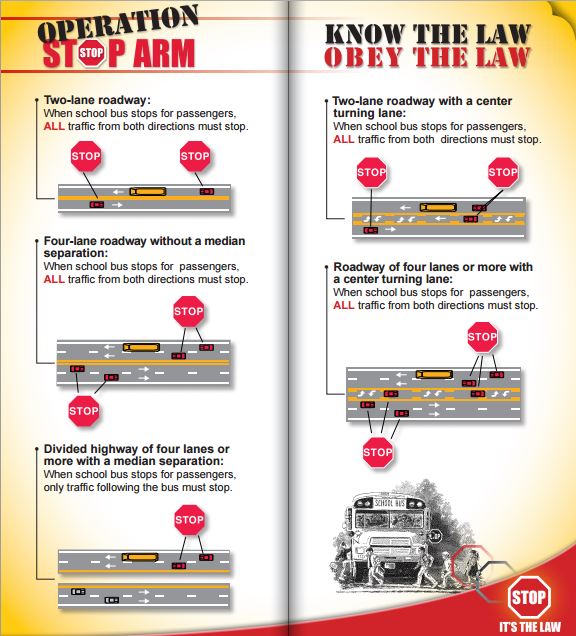
Speaking of “riding the bus”…, have you ever wondered, “Where do I stop when the bus stops??” Check out the diagrams below and you’ll never have to wonder again!

Operation Stop Arm Bus Diag

Fast Facts About Fulton School Buses –

  • 760 buses crank every school day
  • 79,000+ eligible riders
  • Travel over 10 million miles annually
  • Travel over 50,000 miles daily
  • Deliver more than 1600 morning loads
  • Supports all daily and extracurricular programs including athletics, magnet programs, ESOL, special needs, special needs pre-k, summer programs, TAG programs, Extended Learning Programs, sweep buses, activity buses and activity driver training

So, the next time you see the school bus in your neighborhood, be sure to thank the driver for their hard work keeping our children safe and making the journey to and from home and school an enjoyable one!

Every Drop Counts: Protecting Homes from Flood Damage – KW Blog

We have all seen images of the damage that flooding causes. Floods can happen almost anytime, anywhere. Flooding causes an average of $8 billion in property damage in the United States each year according to the National Oceanic and Atmospheric Administration (NOAA). And it doesn’t take much to cause damage. According to the National Flood Insurance Program, just 1 inch of water can cause almost $21,000 in damage to a 2,000-square-foot home.

Your Policies Do Not Cover Floods

What you may not realize is that your homeowner’s insurance policy likely does not cover floods. To be protected against flood damage, secure additional coverage specific to flooding. In some cases, depending on where the home is located, lenders might require proof of flood insurance. As your real estate agent, I will connect you to insurance professionals who can help you find out early if flood insurance will be required. This could be an important factor in your purchase decision.

Protection Beyond Insurance

There are some precautions you can take to help safeguard your home from damaging flood water.

Ground-level flooring should be tile or stone. Wood flooring and carpet are more susceptible to rot when exposed to large quantities of water.

Check the roof for leaks and repair them immediately. When replacing the roof, make the additional investment to install a rubber roof underlayment, which is a waterproof barrier that sits under the shingles and protects your home from water entering through the roof.

Consider investing in a sump pump and keep it handy in the event you need to remove excess water from the home.

It Doesn’t Need to Rain to Flood

Keep in mind that damaging waters do not come only from excessive rain and inclement weather; homes can flood from broken pipes, faulty appliances or human error such as leaving a faucet running.

Top 3 Wintertime Home Improvement Ideas for Best ROI

While wintertime may not be the best time to be outside painting or landscaping, it is an ideal time to complete various home improvement projects that require you to be inside. It is typically a slow season for contractors so materials are less expensive; you’ll have more contractors to choose from; the contractor you choose is more likely to have an open schedule; and, may even be more inclined to quote a job at a lower rate to get your business!

KEEP YOUR EYE ON THE KITCHENAsk any real estate expert what the No. 1 upgrade with the greatest return is, and the answer will be the kitchen. Fortunately, you can pull off several small projects that make your kitchen look and feel like a whole new space:

  • Cabinet-refacing might be tempting, but why not go with a simple change of hardware instead? For about $5.00 each, you can buy new hardware which is easily installed with a screwdriver and drill.  If it’s time for a full remodel consider ordering kitchen cabinets that you can assemble and install yourself. This is not only less expensive, but it also adds value to your home.
  • Countertops that are upgraded from laminate to granite offer another excellent return on investment.
  • A new backsplash provides wonderful inspiration for a more dramatic look. Typically requiring only a few boxes, new tile is elegant, attractive, and won’t break the bank.
  • Go stainless steel by transitioning your appliances as they wear out and go with a similar metallic look in your light switches, sink and faucet.
  • Lighting is critical for adding warmth to your home this winter. With the sun setting earlier you can brighten up your kitchen with some recessed lighting!
  • Install a water filtration system. It is a small luxury that everyone can enjoy.
  • Finally, along with a fresh coat of “Low VOC”- and no VOCformula paint, these relatively inexpensive updates can completely transform and modernize the look of your kitchen.

Kitchen

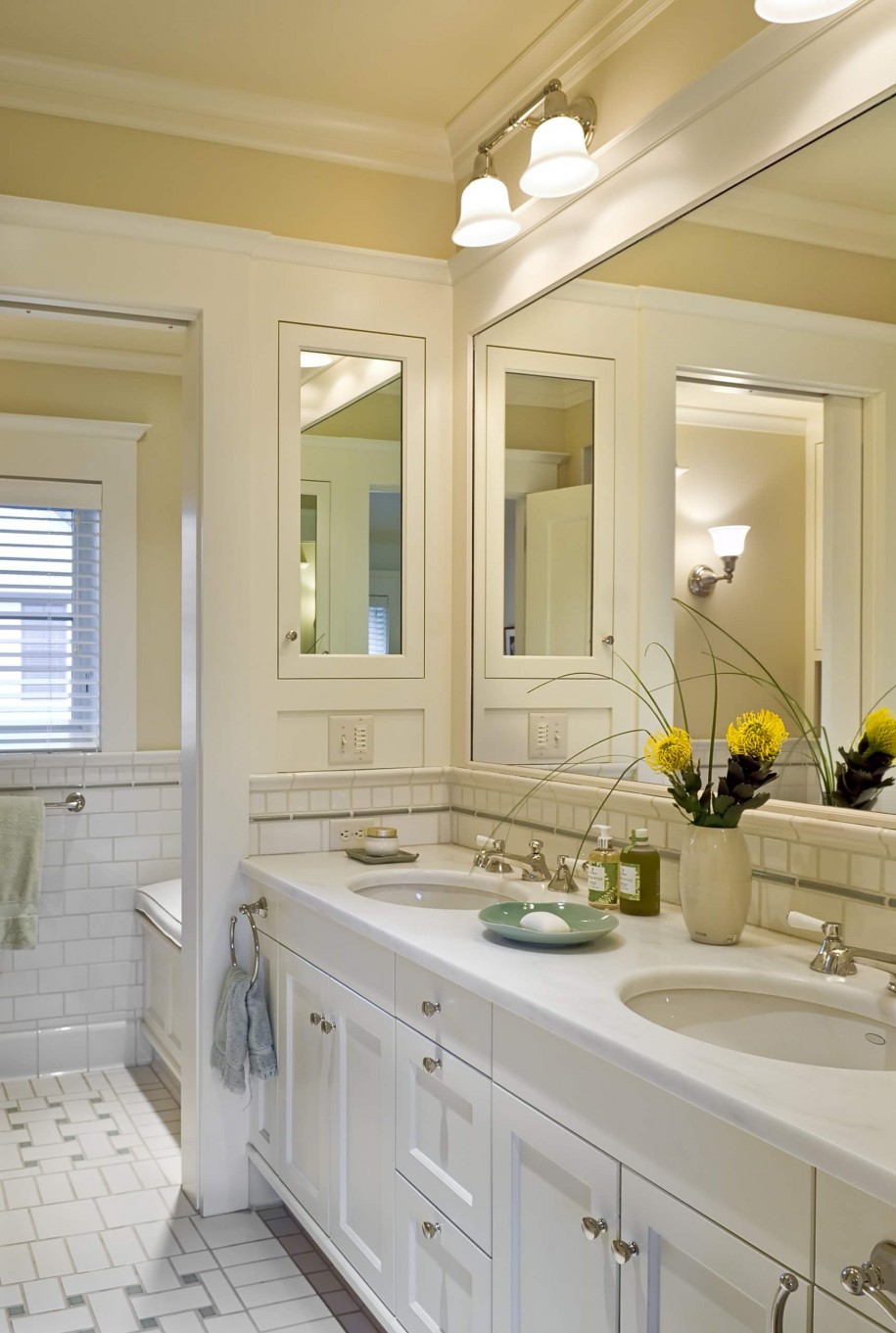
BEAUTIFY YOUR BATHROOM…Of all the rooms in your house, the bathroom is the workhorse. Keep it well-maintained while creating a spa-like environment that is both relaxing and functional by considering these improvements…

Upgrade to: an under-mount sink; granite or marble countertops; recessed cabinets; a water-saver toilet; new faucets; wall-mounted light fixtures; heated flooring; and a shower with body sprays and stone surround tile. A fresh coat of paint or faux/textured wall paper can dramatically change the appearance of the room and make colors seem more vibrant. Coordinated with matching rugs, towels, curtains and countertop accessories a completely remodeled bathroom will give your bath an updated, modern look.

Bathroom

FOCUS ON THE FLOORS…From all sorts of stone to terracotta to marble— the flooring of your home can help shape the look and feel you want for your home for years to come. Wood floors have never been easier to install yourself and they can be quite affordable. Additionally, hardwood flooring bridges the style gap between older, traditional homes and ultra-modern homes, adding simple elegance – and value – to every room.

Flooring

…Below are a few more home improvement projects that can deliver excellent bang for your buck this winter:

  • Install crown molding
  • Refinish the banisters
  • Repaint baseboards
  • Replace weather-stripping
  • Convert a small room into a massage/yoga/meditation room
  • Convert the space under the stairs into a wine cellar
  • Add a home theater

Remember, even minor cosmetic upgrades can create the perception of newness and freshness while adding to your home’s value.

Three Things You Can Do Today In Five Minutes Or Less That Could Save Your Life Tomorrow

Image

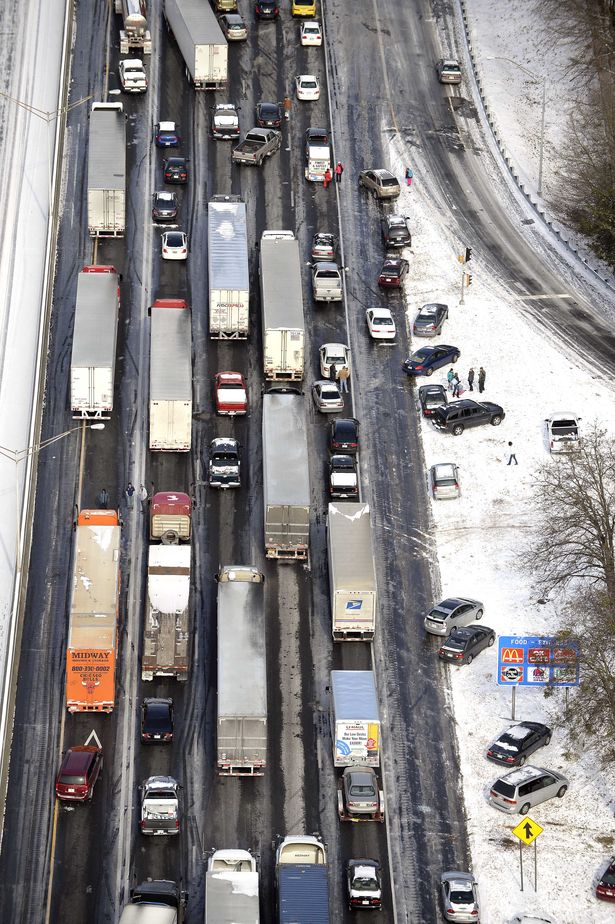
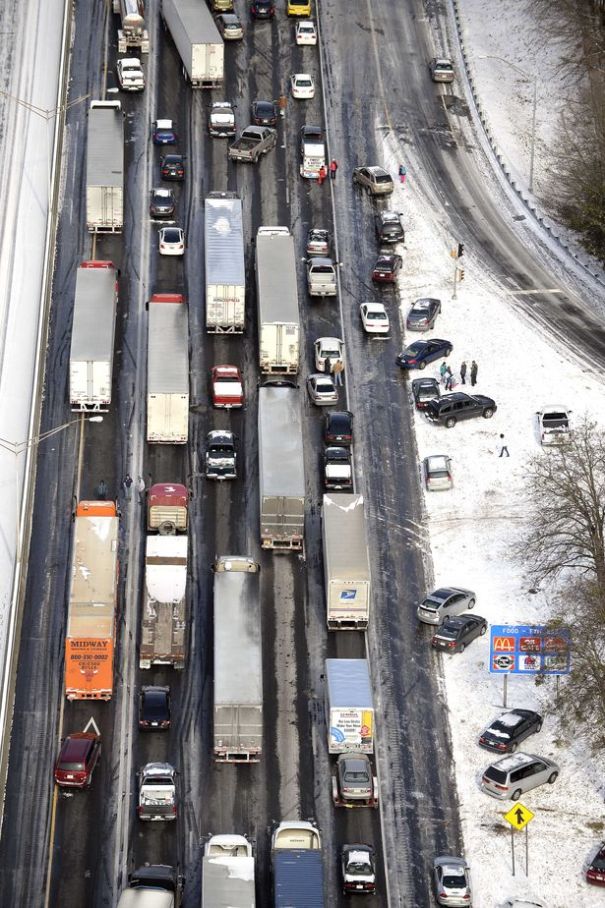
Courtesy of the AJC. Motorists chat outside their vehicles after spending the night on the highway @ I-75 and Moores Mill Road, Atlanta, Wednesday, January 29, 2014.

http://media.cmgdigital.com/shared/lt/lt_cache/thumbnail/615/img/photos/2014/01/29/41/8b/Winter_Weather_Georgia_.JPE1_1.JPG

It’s the Wednesday after “Snowpocalypse 2014” in Atlanta, and someone posted the question on the “SnowedOutAtlanta” Facebook page, “do you think we should put an emergency kit in our cars?”

I sincerely hope you do that, and more!

Here are three things you can do today – in five minutes or less – that could save your life tomorrow – or perhaps this week, when additional extreme weather (for us) is forecast:

1)       Pack a “GO” Bag and put it in the trunk/hatch of your vehicle. The purpose of a GO Bag is to enable you to Get Out (of trouble). Parked on a gridlocked interstate for 12-to-24+ hours with temps dropping well below freezing is definitely one type of what I call trouble. At a minimum, your GO bag for mid-October through mid-April in the southeastern US should include: 

  1. a backpack for easy storage and transport
  2. a pair of hiking boots or walking shoes (preferably broken-in and waterproof)
  3. a pair of extreme cold weather (XCW) socks
  4. a pair of sweatpants that fits over whatever you usually wear (suitpants, jeans, whatever) to add that extra layer of wind-breaking, cold-busting comfort
  5. a sweatshirt/fleece jacket that fits over your blouse/shirt – which, frankly, many of you ladies would really benefit from having with you pretty much at all times, given your proclivity for being cold indoors even in the summer (HELLO!)
  6. your standard cold-weather gear:  a 3-in-1 or 4-in-1 parka with liner, a pair of XCW gloves, a ski cap/face mask and scarf…if you don’t know what to wear outdoors in the cold, ask a hunter, snow skier or biker – it’s what they do!
  7. a quart or more of potable water
  8. a few energy/protein bars and snacks
  9. at least 3 days’ medications – pain relievers, insulin, heart meds – whatever you need.

Note:  don’t leave your GO bag in the trunk; rather, take it with you when you’re taking a road trip in someone else’s vehicle, and take it into your home/hotel room/etc. overnight so the liquids and electronics therein don’t freeze and start acting funny…Cold temps drain batteries, cause tires to lose air pressure, and freeze moisture (water expands when it turns to ice). 

Mind you, this is supplemental to both a vehicle emergency kit and your EDC kit. Oh, yeah – if you have kids, spouse, etc. in the car, have one for each! Those of you who spent the night on 285 – imagine: if you had these things, you could’ve walked to shelter nearby…

The vehicle emergency kit should remain in your car year-round. Do consider taking it with you on a road trip in a rental car or someone else’s car if they’re not prepped like you! Change certain items out every 3-to-6 months – e.g., store the snow chains in the garage come late Spring, check the charge on your fire extinguisher, and refresh your extra water (which, in addition to emergency hydration, can be used to refill your radiator after you’ve used the duct tape in your kit to repair that unexpected pinhole leak in the hose). Check http://tinyurl.com/vehemerkit for more of what to include.

Your “EDC”, or Every Day Carry, kit consist of items that should be on your person or within reach pretty much all day every day. Keys, tactical flashlight, pocketknife, emergency cash & credit cards, mobile phone with car and home chargers and juice pack, and a business card with important phone numbers/info written on the blank back so when your phone’s battery dies – you don’t have to follow suit!

What else would you put in your EDC kit? Your GO Bag? Your vehicle emergency kit? Do it now, before you NEED it and don’t have it! And share your thoughts in the comments below!

2)       Check your tires for proper inflation and serviceable condition. Tires lose pressure in cold weather, leading to uneven wear and other potential dangers. A tire pressure gauge can be had for as little as $2 at the local auto parts chain, and having your own can be a life-saver rather than depending on the accuracy and availability of one that may (or may not!) be built-into the air hose at a gas station, or that’s part of your vehicle’s electronics package. 

Check your tires when they’re cold – in other words, when they’ve been sitting not driven for an hour or more. [The vehicle manufacturer’s recommended cold tire pressure(s) should be listed in the owner’s manual and on a sticker on the inside of the driver’s door frame. The tire manufacturer also lists in fine print on the tire’s sidewall the maximum cold psi.] Write down the cold pressure, then drive to the service station (if underinflated) and check again – the air pressure increases as the air inside the tire heats up from the friction of tread on road, sometimes 2, 3, 4 or even 5+ psi (pounds per square inch). If the carmaker recommends 32 psi, and your cold reading was 27, you should add 5 psi when you get to the air hose. E.g., if your “warm” reading is 30 after driving a mile or 10 to the air hose, fill it to 35 and you should be close to 32 cold. 

Regarding serviceable condition, I just googled “youtube check my tires” and watched a few videos for you – in my opinion, this one is the most comprehensive and helpful of the first page of results, so invest 3 minutes in some additional tire tips: http://www.youtube.com/watch?v=ck9rmeG3lgE.  Driving on worn-out or otherwise damaged tires can lead to inconvenience at best – and possibly catastrophe – for you, your passengers, and even potentially thousands of drivers who could get stuck behind your broken-down vehicle.

PLEASE! Check your tires today. And once a month, while you’re at the gas station filling up.

3)      Check the weather forecast! There’s an app for that! And decide for yourself whether meteorologists, government officials, employers, journalists or others have a track record worth trusting. [Q: who’s going to be stuck in gridlock, running out of gas, spending the night in their car, kids left at school, etc.? A: The person responsible for making the right decision for themselves, their family and their workplace.]

Invest a few minutes today into YOUR comfort, safety and security tomorrow!

If you like this post, please subscribe, link, tweet, ‘like’ on facebook, and spread the word! You might just save a life.

#snowmageddon, #snowpocalypse, #snowjam, #gridlock, #survival

Feel free to comment on your “Snowmageddon” story below!
Cyber Monday: 92% of home searches use internet

Image

Cyber Monday, a marketing “holiday” created to encourage a Black Friday-like spike in online retail sales, is here! But what about buying or selling a home online?

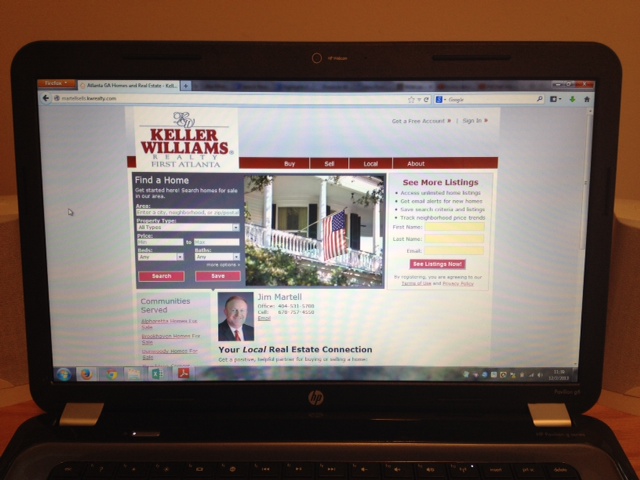
The National Association of Realtors recently posted their “Highlights From the 2013 Profile of Home Buyers and Sellers“, revealing that a staggering 92% of home searches utilize the internet.

Other highlights include:

  • 88% of home buyers utilized the services of a real estate agent to purchase their home
  • Less than 1 in 10 sellers were successful in selling their homes without the assistance of a real estate agent
  • Two-thirds of home sellers only contacted one agent before selecting the one to assist with their home sale.

How about you? Will you be shopping for a new home online this Cyber Monday? What about checking the value of your current home?

For more information, text KW4RNW3B to 87778, or click here from your smart device.